Launch offer — valid today only

📄 Digital book in PDF · read it on your phone or print it

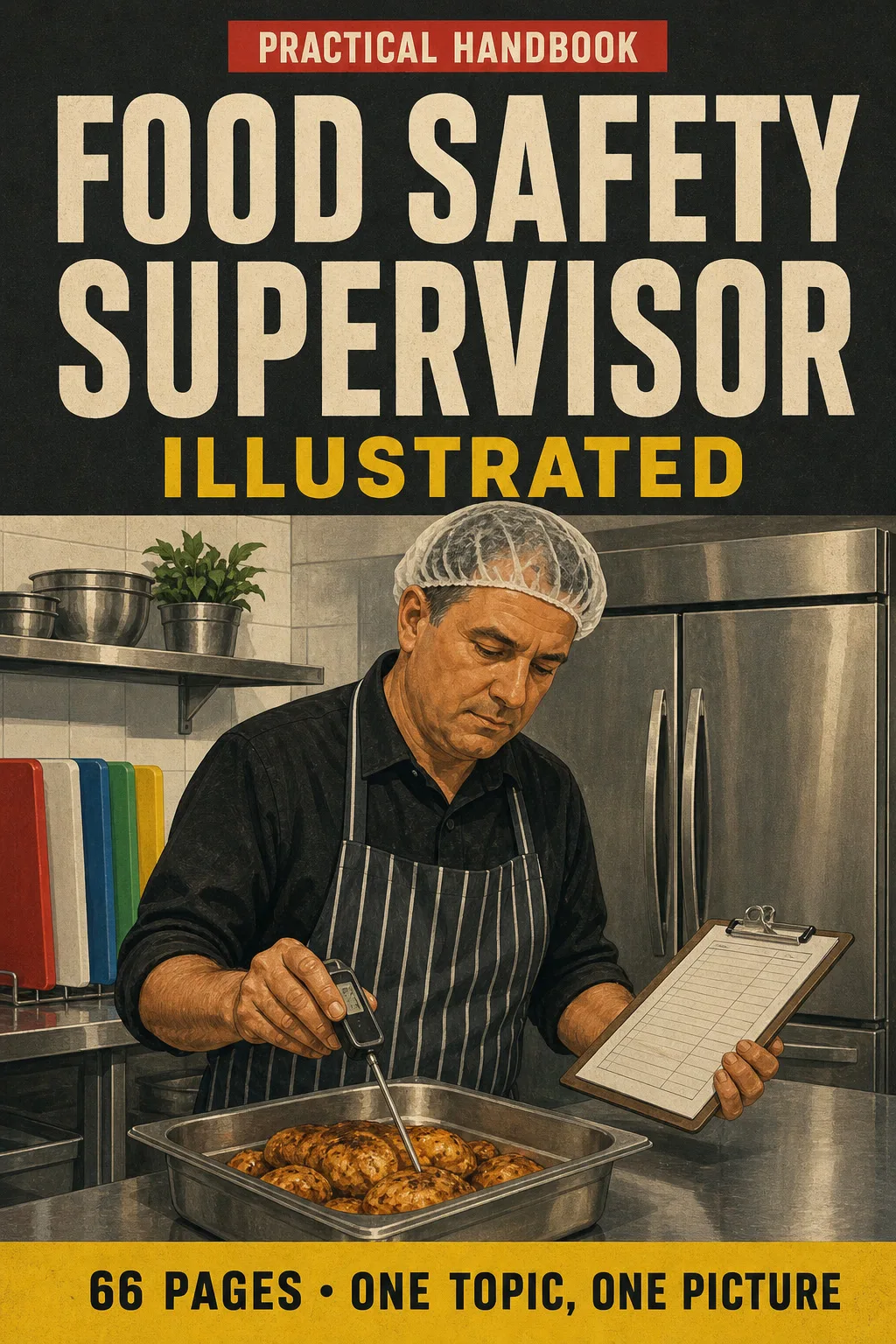
Food Safety Supervisor Illustrated: Every Temperature, Shelf and Allergen Call You Make in the Kitchen One Duty on Every Page

The danger zone, two-stage cooling, the 2-hour/4-hour rule, the fridge shelf map, clean then sanitise, allergens, staff training and records. Every topic has its own page: the drawing first, then what you need to remember. 66 illustrated pages.

YES, I WANT THE ILLUSTRATED BOOK

🔒 Secure checkout · PDF by email · 30-day guarantee

Every topic, its own pageEach rule drawn, with the explanation right beside it
66 illustrated pages8 parts, from your role as Food Safety Supervisor to the review checklists
Up-to-date sourcesFood Standards Code (Standards 3.2.2 and 3.2.2A), FSANZ Safe Food Australia and state food regulators
PDF by emailFormat

Look Inside the Book

Every page has one big drawing and a box with the temperatures, times and steps you need to know:

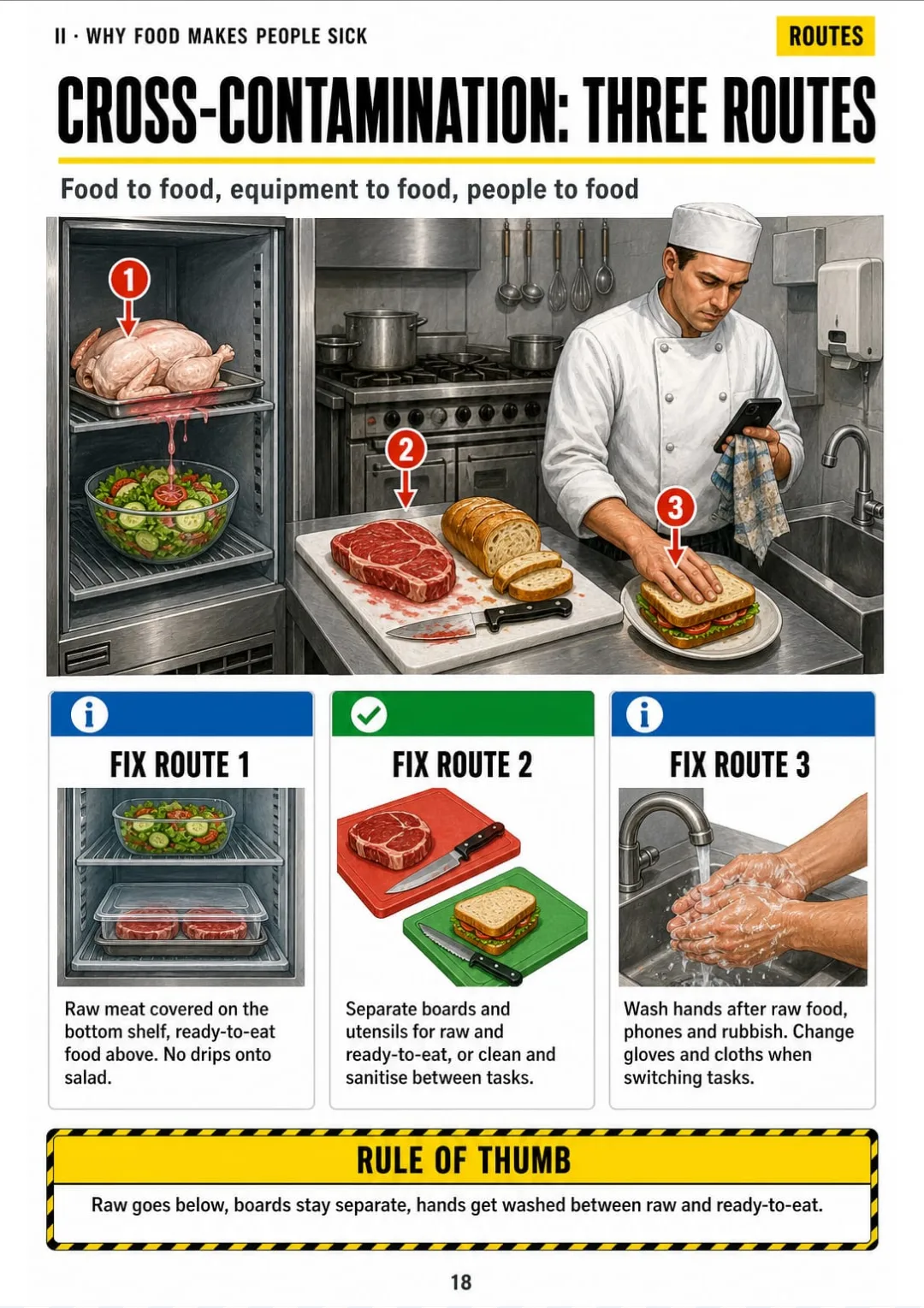
Food to food, equipment to food, people to food: one kitchen, three fixes.
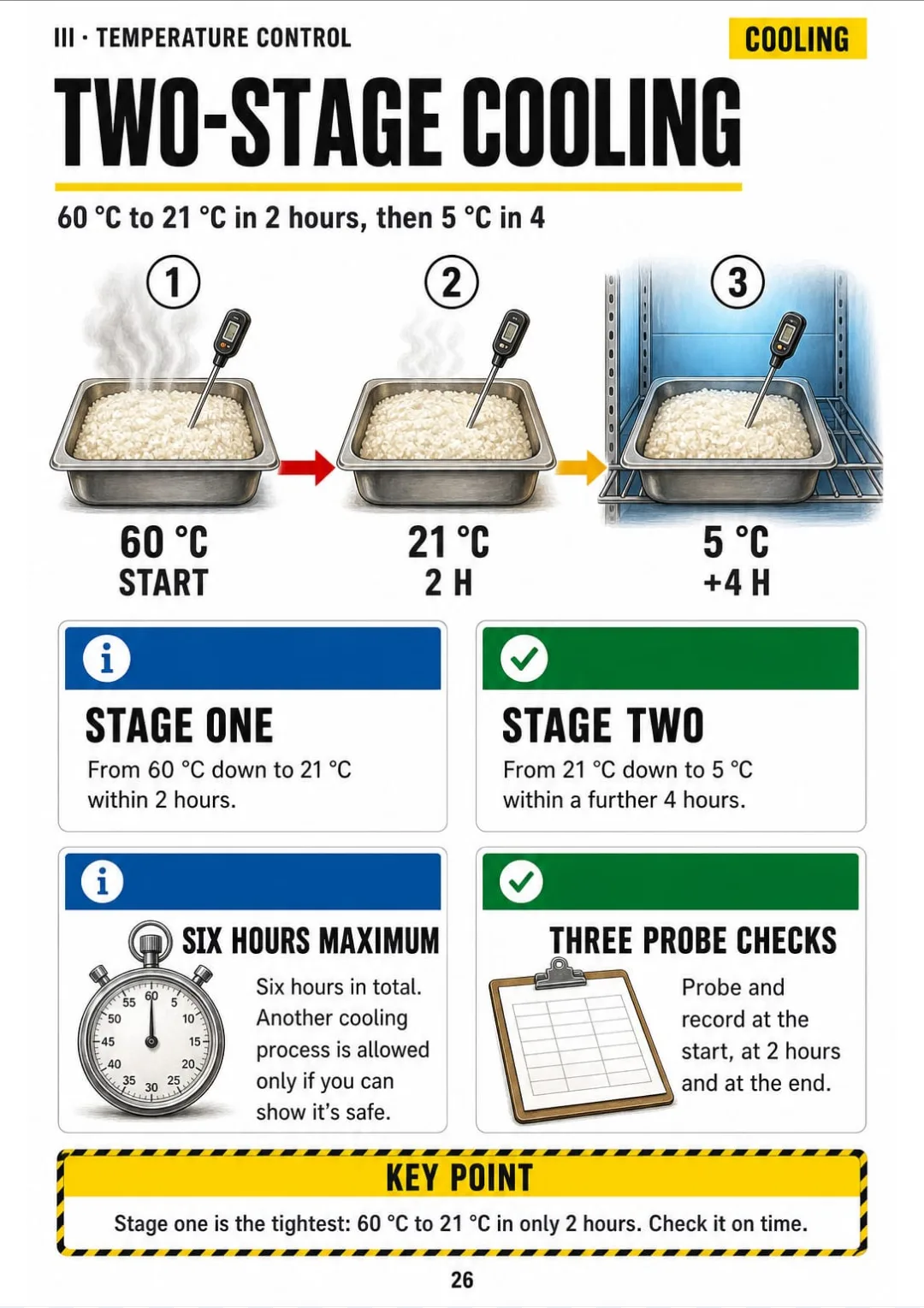
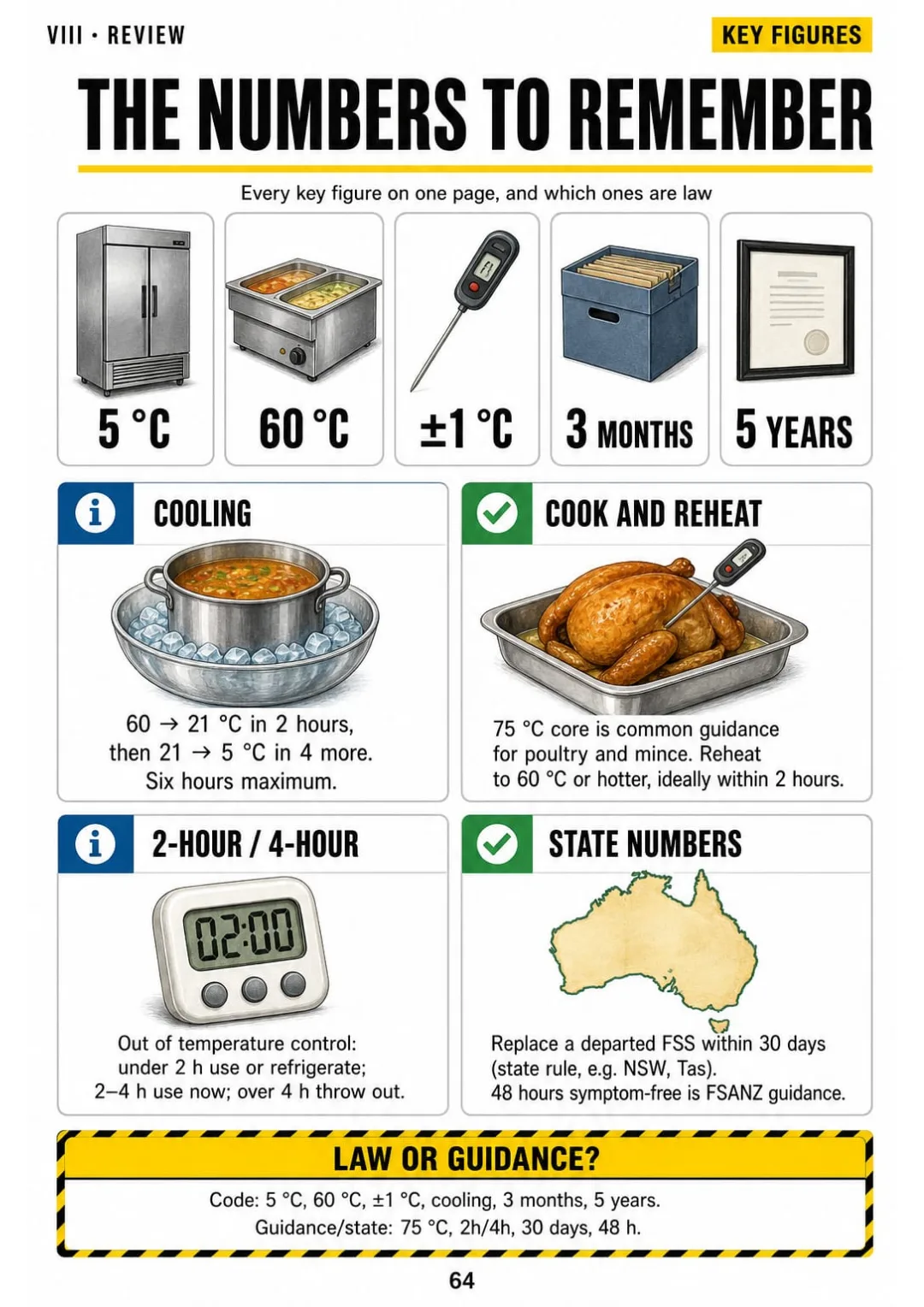
Two-stage cooling: 60→21 °C in 2 hours, then 21→5 °C in 4 more.
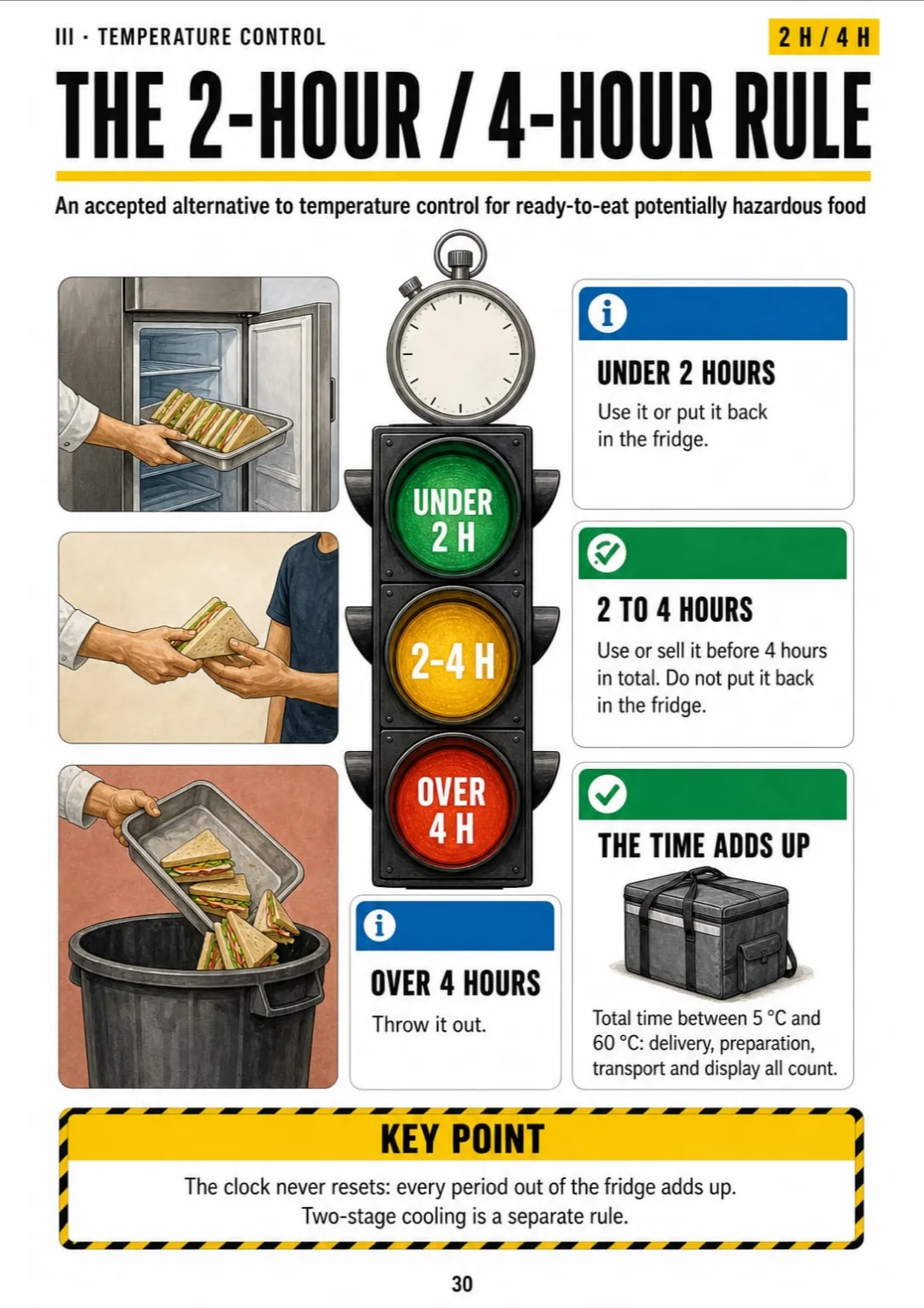
2-hour/4-hour rule: under 2 h use or chill, 2–4 h use now, over 4 h throw out.
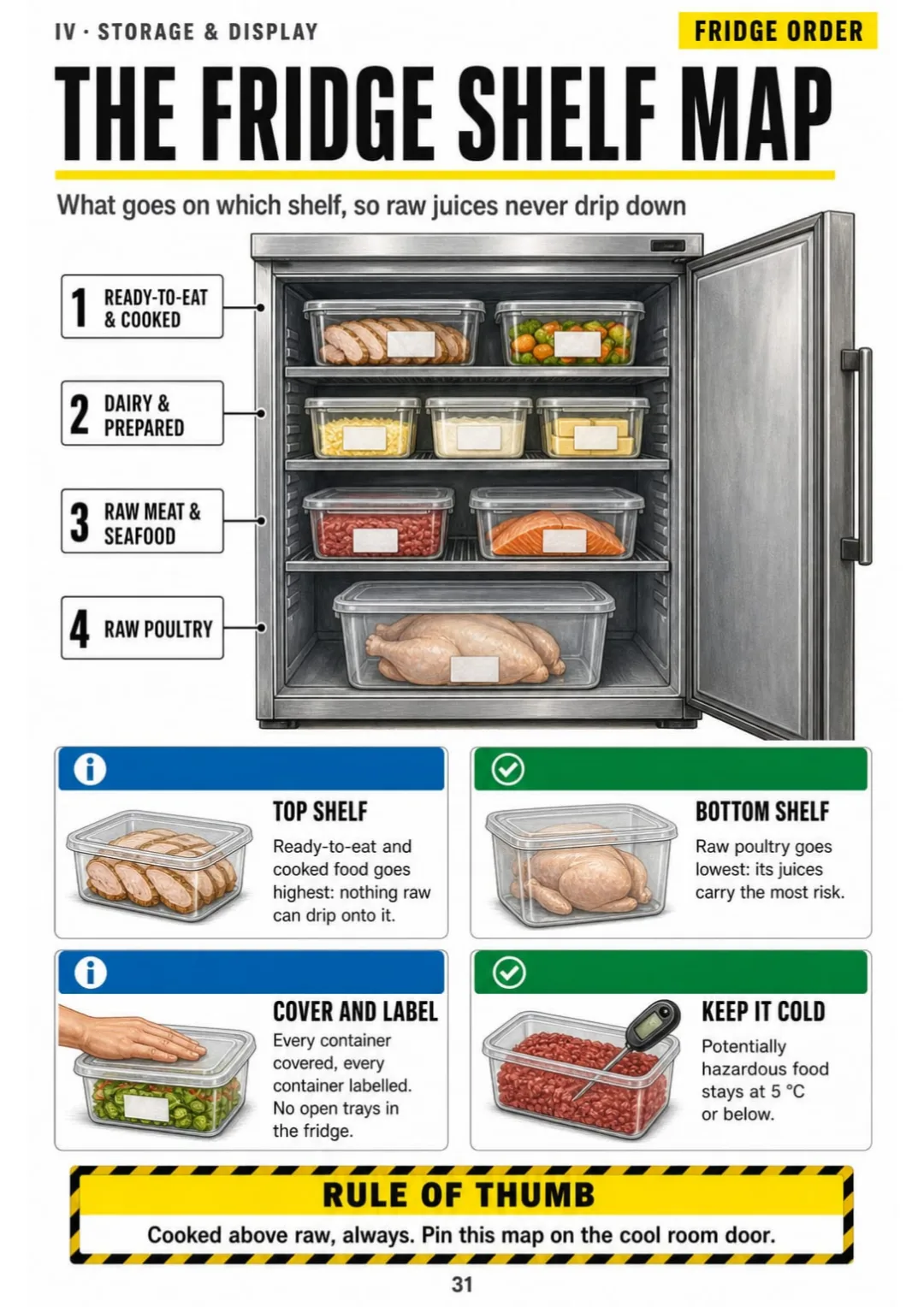
Four shelves, top to bottom: ready-to-eat, dairy, raw meat and seafood, raw poultry.
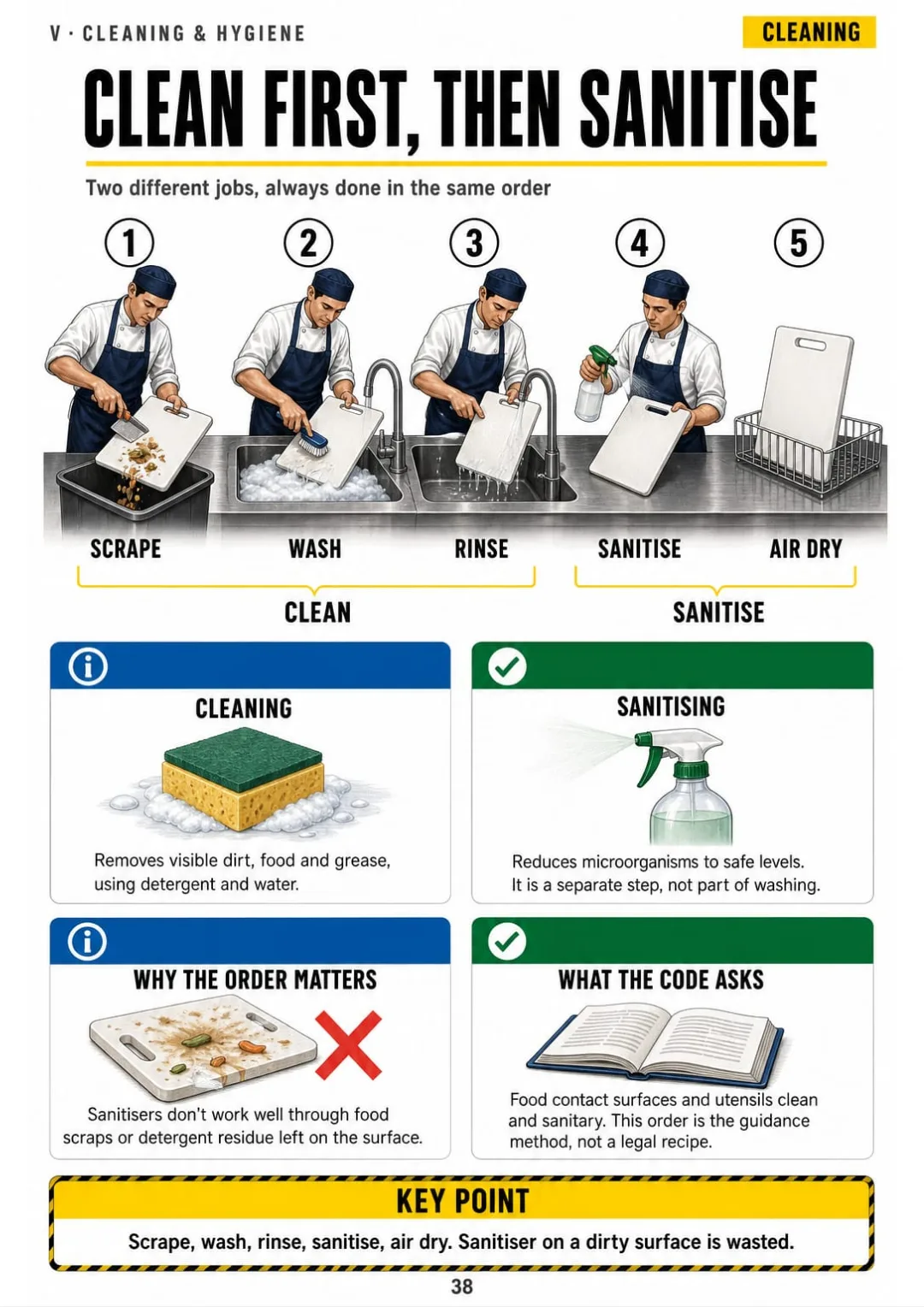
Scrape → wash → rinse → sanitise → air dry, always in that order
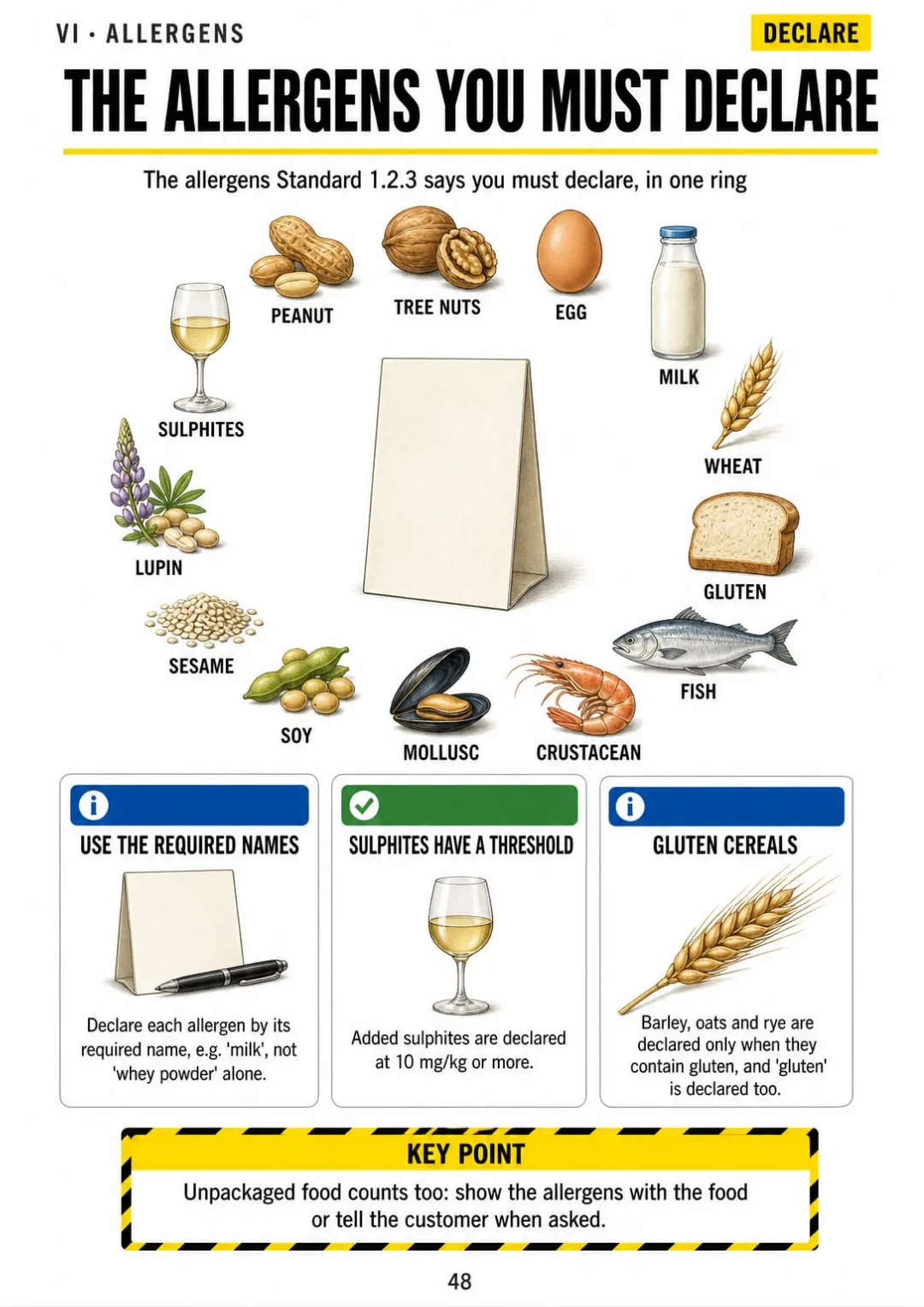
Peanut, tree nuts, egg, milk, wheat, gluten, fish, crustacean, mollusc, soy, sesame, lupin, sulphites ≥10 mg/kg
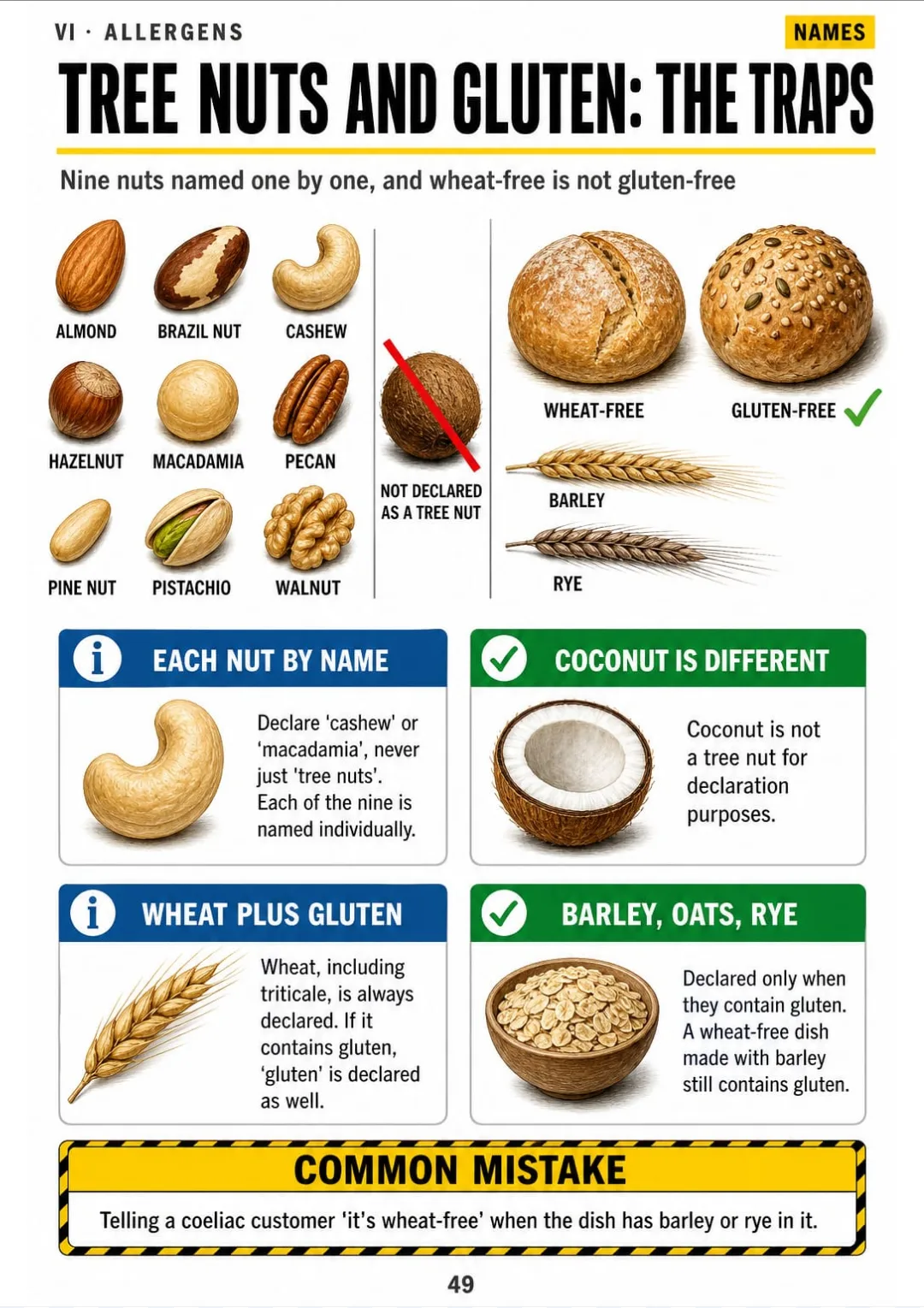
9 tree nuts declared one by one · coconut is not a tree nut · wheat-free ≠ gluten-free
5 °C, 60 °C, ±1 °C, 60→21→5 °C in 2+4 h, 2h/4h, 3 months, 5 years, 30 days, 48 h.

Swipe to see more →

These are real pages from the book. The table of contents is the full one: 8 parts and 62 topics.

The Problem Isn't You. It's How It Was Explained to You.

It's Saturday lunch. A tray of cooked chicken has been sitting on the pass since the rush started, and your new kitchenhand asks: back in the fridge, serve it, or bin it?

You did the course. The answer was in there somewhere, inside a long paragraph about total time out of temperature control. Read as a paragraph, the rule doesn't come back when the kitchen is loud.

2-hour/4-hour rule: under 2 h use or chill, 2–4 h use now, over 4 h throw out.

In the book, the 2-hour/4-hour rule is one drawn page: under 2 hours, use it or put it in the fridge; 2 to 4 hours, use it now; over 4 hours, throw it out.

And it's never just the tray. Which shelf the raw chicken goes on, whether that bench was sanitised or only wiped, what's in tonight's special for the customer with a sesame allergy: dozens of rules, all learnt as text, all needed at the same time.

You look at the tray, picture the page and make the call on the spot, without going back to the course notes. Then you show the same page to the kitchenhand.

COMPARE FOR YOURSELF

The Same Topic, Two Ways to Study It

THIS
  • The manual: lines and lines of text
  • Cooling times explained only in words
  • You face the inspector still unsure
Cooling cooked food is one of the most important controls in a commercial kitchen, because bacteria multiply quickly between 5 °C and 60 °C and some of them form spores that survive cooking. For this reason, when large batches such as stocks, sauces, rice or roast meats are prepared in advance, the cooling process has to be planned and monitored, taking into account the size of the container, the depth of the food, the capacity of the coolroom and the time the food spends at each temperature, which should be recorded so the business can show the process is under control.
FOR THIS
  • Two-stage cooling as one drawn timeline
  • The temperatures and times in a box
  • You see it and you get it
Two-stage cooling: 60→21 °C in 2 hours, then 21→5 °C in 4 more.
CONTENTS

Take a Look at the 8 Parts and 62 Topics

Your role, why food makes people sick, temperature control, storage and display, cleaning and hygiene, allergens, training and records, and the review checklists: 66 pages, all illustrated.

IYour Role as Food Safety Supervisor · pp. 5-11
  1. What a Food Safety Supervisor actually does
  2. Standard 3.2.2A in one page: the three tools
  3. Category one or category two?
  4. Your certificate: where it comes from and how long it lasts
  5. Being 'reasonably available'
  6. When your FSS leaves: the 30-day rule
  7. Your state or territory adds its own rules
IIWhy Food Makes People Sick · pp. 12-18
  1. Three kinds of hazard
  2. Potentially hazardous food: which foods count
  3. What bacteria need to grow
  4. Spores and toxins: why reheating does not fix everything
  5. The bugs to know by name
  6. Vulnerable customers
  7. Cross-contamination: the three routes
IIITemperature Control · pp. 19-30
  1. The danger zone: 5 °C to 60 °C
  2. The probe thermometer
  3. Checking your thermometer is accurate
  4. Receiving deliveries
  5. Cold storage and the freezer
  6. Thawing safely
  7. Cooking to a safe core temperature
  8. Two-stage cooling
  9. How to make food cool faster
  10. Reheating
  11. Hot holding
  12. The 2-hour / 4-hour rule
IVStorage, Handling and Display · pp. 31-37
  1. The fridge shelf map
  2. Labelling and stock rotation
  3. Colour-coded boards and separate utensils
  4. Eggs and raw egg dishes
  5. Rice, sushi and other tricky foods
  6. Displaying food and self-serve
  7. Takeaway, delivery and catering transport
VCleaning, Hygiene and Premises · pp. 38-47
  1. Clean, then sanitise: two different steps
  2. Sanitising with heat or with chemicals
  3. Using the commercial dishwasher properly
  4. The cleaning schedule
  5. When to wash your hands
  6. How to wash hands and the handwash basin
  7. Gloves are not a handwash
  8. Sick staff: report and stay out
  9. Personal hygiene on shift
  10. Premises, pests and waste
VIAllergens · pp. 48-53
  1. The allergens to know
  2. Tree nuts and gluten: the names that confuse
  3. Taking an allergen order step by step
  4. Allergen cross-contact in the kitchen
  5. Ingredient changes and supplier labels
  6. When a customer has a reaction
VIITraining and Records · pp. 54-61
  1. Food handler training: the four topics
  2. How to train your staff with one page
  3. Records for category one: what to record
  4. How long to keep records
  5. Filling in a temperature log properly
  6. Filling in a cooling log
  7. Showing control without a written record
  8. The inspection: what the council officer looks at
VIIIReview and Checklists · pp. 62-66
  1. Opening checklist
  2. Closing checklist
  3. The numbers to remember
  4. The most frequent mistakes in a busy kitchen
  5. Using this book before your assessment

One Page, One Topic, All Clear

Think of it this way:

It's 9 pm, tomorrow's stock is finished and it has to go in the coolroom. How long does it have to drop from 60 °C to 21 °C?

You open the two-stage cooling page and see it drawn as a timeline: 60 → 21 °C in 2 hours, then 21 → 5 °C in 4 more.

Scrape → wash → rinse → sanitise → air dry, always in that order

Same with the fridge shelf map, clean then sanitise, the allergens you must declare, the cooling log and what the council officer looks at: each one on its own page.

Food Safety Supervisor Illustrated is 8 parts and 62 topics, all drawn, with opening and closing checklists and the numbers to remember at the end.

What you see drawn, you don't have to memorize.

What's Inside Food Safety Supervisor Illustrated:

Ipp. 5-11

Your Role as Food Safety Supervisor

What a Food Safety Supervisor does, Standard 3.2.2A and its three tools, category one or two, your certificate, being reasonably available, the 30-day rule and your state's own rules.

IIpp. 12-18

Why Food Makes People Sick

The three kinds of hazard, potentially hazardous food, what bacteria need, spores and toxins, the bugs to know by name, vulnerable customers and the three routes of cross-contamination.

IIIpp. 19-30

Temperature Control

The 5 °C to 60 °C danger zone, the probe thermometer and its accuracy check, deliveries, cold storage, thawing, cooking, two-stage cooling, reheating, hot holding and the 2-hour/4-hour rule. So when the probe gives you a number, you know what to do with the food.

IVpp. 31-37

Storage, Handling and Display

The fridge shelf map, labelling and stock rotation, colour-coded boards, eggs, rice and sushi, display and self-serve, and takeaway, delivery and catering transport.

Vpp. 38-47

Cleaning, Hygiene and Premises

Clean then sanitise, heat or chemicals, the commercial dishwasher, the cleaning schedule, handwashing and the basin, gloves, sick staff, personal hygiene, pests and waste.

VIpp. 48-53

Allergens

The allergens to know, the tree nut and gluten traps, taking an allergen order step by step, cross-contact, ingredient changes and what to do when a customer reacts.

VIIpp. 54-61

Training and Records

The four food handler training topics, training staff with one page, what category one businesses record, how long to keep records, temperature and cooling logs, and the inspection.

VIIIpp. 62-66

Review and Checklists

Opening and closing checklists, the numbers to remember, the most frequent mistakes in a busy kitchen and how to use the book before your assessment.

At the end of the book: Opening and closing checklists, the numbers to remember on one page and the most frequent mistakes in a busy kitchen.
Plus: 2 Free Books

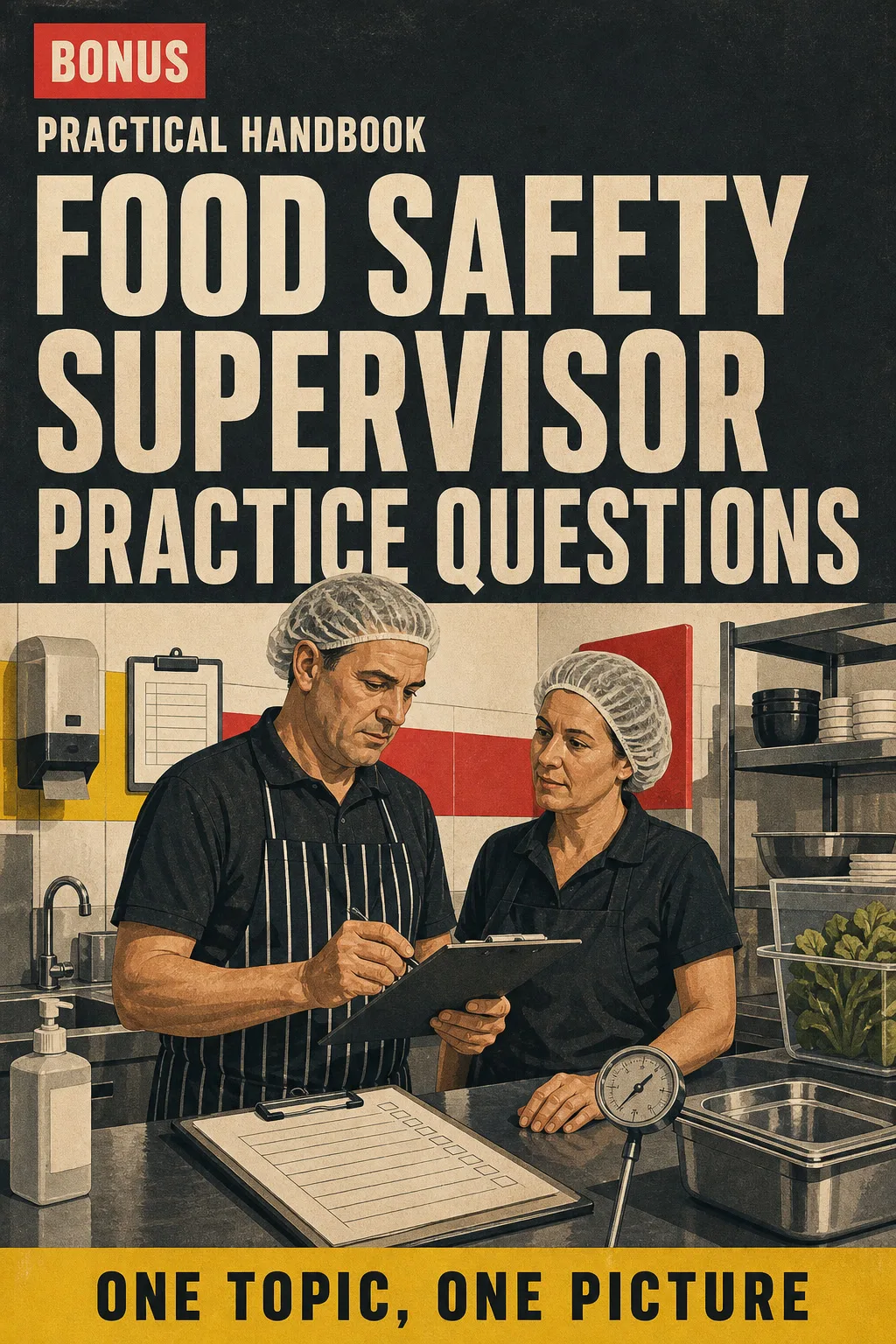
Food Safety Supervisor Practice Questions

BONUS 1: «Food Safety Supervisor Practice Questions»

Value on its own: US$ 17.90

Test yourself topic by topic with exam-style questions and a short explanation for every answer, so you know exactly which page to go back to before your assessment.

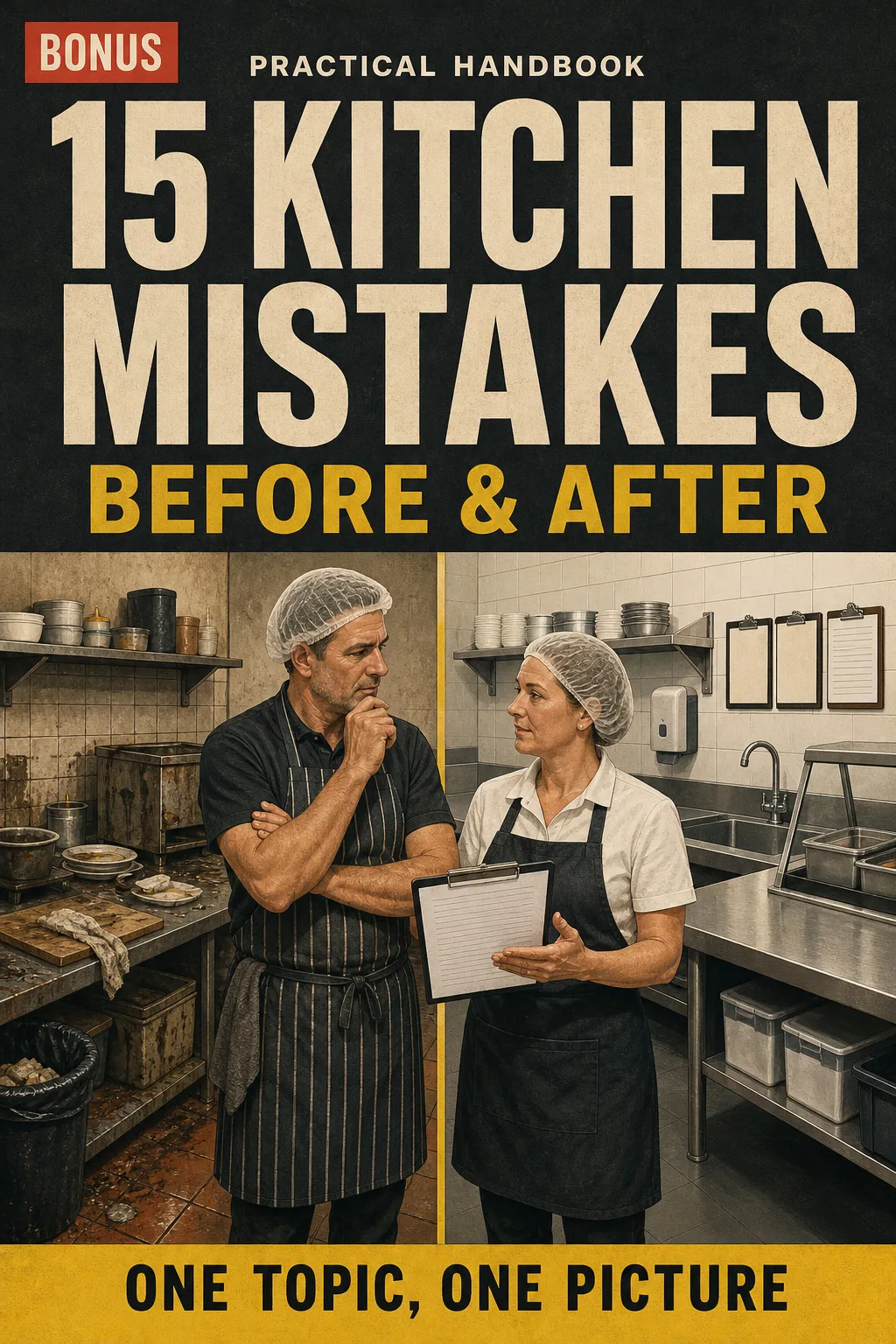
15 Kitchen Mistakes: Before & After

BONUS 2: «15 Kitchen Mistakes: Before & After»

Value on its own: US$ 14.90

See the most frequent food safety mistakes drawn next to the right way, so you can spot them in your own kitchen before an inspector does.

Food Safety Supervisor Illustrated with 2 Free Books

  • Food Safety Supervisor Illustrated: 66 illustrated pagesUS$ 63
  • BONUS 1: Food Safety Supervisor Practice QuestionsUS$ 17.90
  • BONUS 2: 15 Kitchen Mistakes: Before & AfterUS$ 14.90
  • High-resolution PDF to printIncluded
Total value US$ 95.80
YOUR PRICE:
US$ 27
You save US$ 68.80
YES, I WANT FOOD SAFETY SUPERVISOR ILLUSTRATED FOR US$ 27

📄 This is a digital PDF book sent to your email: nothing is printed or shipped.

Secure purchaseEncrypted payment30-day guarantee

PDF by email: We email you Food Safety Supervisor Illustrated as a PDF, together with the two free books. It's a single payment: no installments, no extra charges.

Who This Book Is For

You're doing the FSS course

You're doing the FSS course

Each unit topic becomes one drawn page, so what you study at night is still there the next morning.

Your assessment or renewal is coming up

Your assessment or renewal is coming up

The numbers to remember on one page and practice questions by topic, so you know exactly which page to go back to.

You're already the FSS of your kitchen

You're already the FSS of your kitchen

The rules at hand for the inspector's visit, and the same pages to train your food handlers and pin up in the kitchen.

Everything You Get Today

US$ 95.80US$ 27
YES, I WANT FOOD SAFETY SUPERVISOR ILLUSTRATED FOR US$ 27

📄 This is a digital PDF book sent to your email: nothing is printed or shipped.

30DAYS
GUARANTEE

30-Day Guarantee

Try Food Safety Supervisor Illustrated for 30 days, bonus books included.

We refund everything if the file won't open, if the book isn't what you see here, if you were charged twice or if the email doesn't arrive. Just email us.

You pay once. No subscriptions.

Frequently Asked Questions

Is it for me if I've been working in kitchens for 20 years?

Yes. It isn't a beginner's book: it puts what you already do into the order the role and the standard ask for, with the numbers and records an inspector checks.

Where does the content come from?

From the national rules: the Australia New Zealand Food Standards Code, Chapter 3 (Standards 3.2.2, 3.2.2A and 3.2.3), Standard 1.2.3 for allergens and the FSANZ guide Safe Food Australia. That's why it works in every state and territory. One page covers what your state adds, such as NSW's own Food Safety Supervisor certificate and its renewal, checked against each state and territory food regulator.

Is it official material?

No. It's an independent illustrated study book. It isn't issued, approved or endorsed by FSANZ, any state regulator or any training organisation.

Does it replace the Food Safety Supervisor course?

No. The certificate is issued by a Registered Training Organisation after you complete the course. This book helps you study it, remember it and apply it in your kitchen.

Are the practice questions the ones from the assessment?

No. They're written for this book, topic by topic, with a short explanation for every answer. They aren't official questions from any assessment.

When and how does it arrive?

The book and the 2 bonus books arrive as a PDF by email, to the address you enter at checkout.

Do I have to pay every month?

No. It's a one-off payment. No subscription.

Can I have it on paper?

Yes. The PDF is printable: print the whole book or just the pages you want to pin up in the kitchen.

How does the refund work?

You have 30 days. We refund everything if the file won't open, if the book isn't what you see on this page, if you were charged twice or if the email doesn't arrive: just email us.

Before You Close This Page

No more rereading slides that don't stick.

Two-stage cooling: you see it drawn and that's it.

You face the inspector knowing where everything is.

Drawings make studying faster.

The book is right below.

One-time payment: US$ 27 · Guarantee: 30 days · PDF by email

YES, I WANT FOOD SAFETY SUPERVISOR ILLUSTRATED FOR US$ 27

📄 This is a digital PDF book sent to your email: nothing is printed or shipped.